

Turning Research into Real-World Change
Professor Ben Castleman has dedicated his career to understanding how to improve postsecondary educational outcomes, especially for low-income or under-resourced students. His latest publication, in the American Economic Review, brings new and compelling evidence on how strategic advising influences college success.
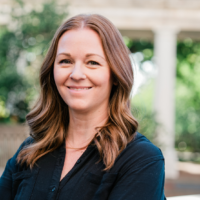
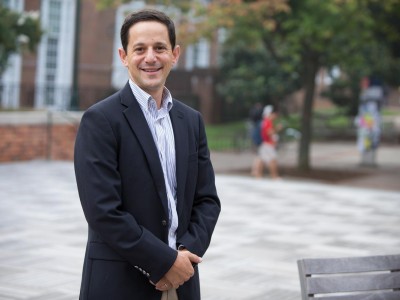 Ben Castleman, Professor of Public Policy and Education at the Frank Batten School of Leadership and Public Policy, has dedicated his career to understanding how to improve postsecondary educational outcomes, especially for low-income or under-resourced students. His work blends economic research methods and long-term partnerships with public and nonprofit organizations.
His latest contribution, co-authored with Andrew Barr, titled “Increasing Degree Attainment among Low-Income Students: The Role of Intensive Advising and College Quality”, published in the prestigious American Economic Review (AER), brings new and compelling evidence on how strategic advising influences college success.
What the New Study Shows
Through their research methods, Barr and Castleman reveal that intensive high school and college advising significantly increases bachelor’s degree completion among lower-income students.
The study finds the success is primarily driven by improvements in initial enrollment quality, meaning students aren’t just more likely to attend college but are enrolling in institutions better matched to support their long-term success.
“Our paper shows that connecting hard-working students with knowledgeable and caring advisors helps them make the jump to higher-quality colleges and universities, which have the resources and opportunities to support students’ success,” explains Castleman.
The research suggests that policies and programs emphasizing individualized advising may produce greater results than those which focus solely on affordability or financial aid. The crucial decisions for students to make around which colleges to apply to and how to navigate admissions may matter as much as the cost.
Advancing UVA Batten’s Work and Impact
This research exemplifies the human-centered, evidence-driven policy work that defines the UVA Batten School’s mission. The work engages directly with the decisions under-resourced students face, what support they need, and how society structures shape opportunities.
Castleman publishes academically and also partners with nonprofits, community colleges, and public entities to scale, assess, and inform policy decisions. His focus on underserved students aligns with Batten’s commitment to expanding access, opportunity, and innovation. By combining policy-relevant data and experimental methods, Castleman’s work demonstrates how human-centered policies can outperform conventional large-scale reforms.
UVA recognized Castleman’s contributions when he received the University’s 2024 Public Impact Focused Research Award. He was honored for demonstrating how his research advances knowledge and impacts people’s lives.
A Broader Research Ecosystem
Over the past decade, Castleman has led and co-authored numerous experimental studies on college advising, student support, financial aid, and more. His work has continually pushed through barriers to improve educational and economic outcomes.
He and his educational partners showcase that there are no simple solutions. The answer lies in commitment, human connection, and evidence. In the new world of AI, automation, and algorithms, many aspects of policy have removed the level of humanity, and his work reminds us that human relationships are indispensable.
Research Impact
Research stretches beyond academic journals at UVA Batten. Through collaborations with nonprofit organizations, state and federal agencies, and more, the faculty work to transform evidence into real-world solutions.
Through this unique approach, UVA Batten reaffirms its mission to develop leaders and design policies that work for all. The School’s integration of research, teaching, and public service ensures that evidence-driven policy becomes everyday practice.
Castleman says, “UVA Batten provides a tremendously rich environment for scholars who publish at the top of their fields and care just as much about their work contributing to positive change in society. Our research extends far beyond the walls of the university and aims to tackle some of society’s most pressing challenges.”
With ongoing grants, partnerships, and new projects, the work of Castleman, other UVA Batten faculty, and students promises to reshape higher education access and success for years to come.
In a world of constantly chasing technological shortcuts and large-scale efficiencies, the research offers a powerful counter-narrative: meaningful, human-centered policy, grounded in evidence, can be the most effective path to lasting change.