Batten alum Maureen Coffey (MPP ’21), a policy analyst on the early childhood policy team at Center for American Progress, says that lack of affordable child care costs families, employers and the entire economy. In an op-ed for MarketWatch, Coffey and co-author Hailey Gibbs outline how a comprehensive national approach could solve the problem.
Child care is one of the most significant expenses for American families. Costs top housing and often college tuition. While child care is often presented as a personal, family issue, parents’ abilities to find and afford child care is inextricably connected to economic stability and growth, and the strength of the nation’s economic recovery relies on bold child-care reform.
In the State of the Union address earlier this month, President Joe Biden shared that many families pay up to $14,000 per year on child care, but that number does not capture the full cost to parents and communities.
The U.S. Chamber of Commerce has broken down the costs of lack of child care into three major buckets: lost income for individuals, primarily mothers, who miss work or leave the workforce, the cost to businesses of replacing employees who are forced out of work due to care challenges, and lost tax revenue to states and the federal government.
$57 billion
The cost of an unstable child-care sector on the country’s economy is immense.
The national economy loses upward of $57 billion annually, directly attributable to child-care issues. And these issues are largely shouldered by women—particularly women of color—whose families often depend on their earnings.
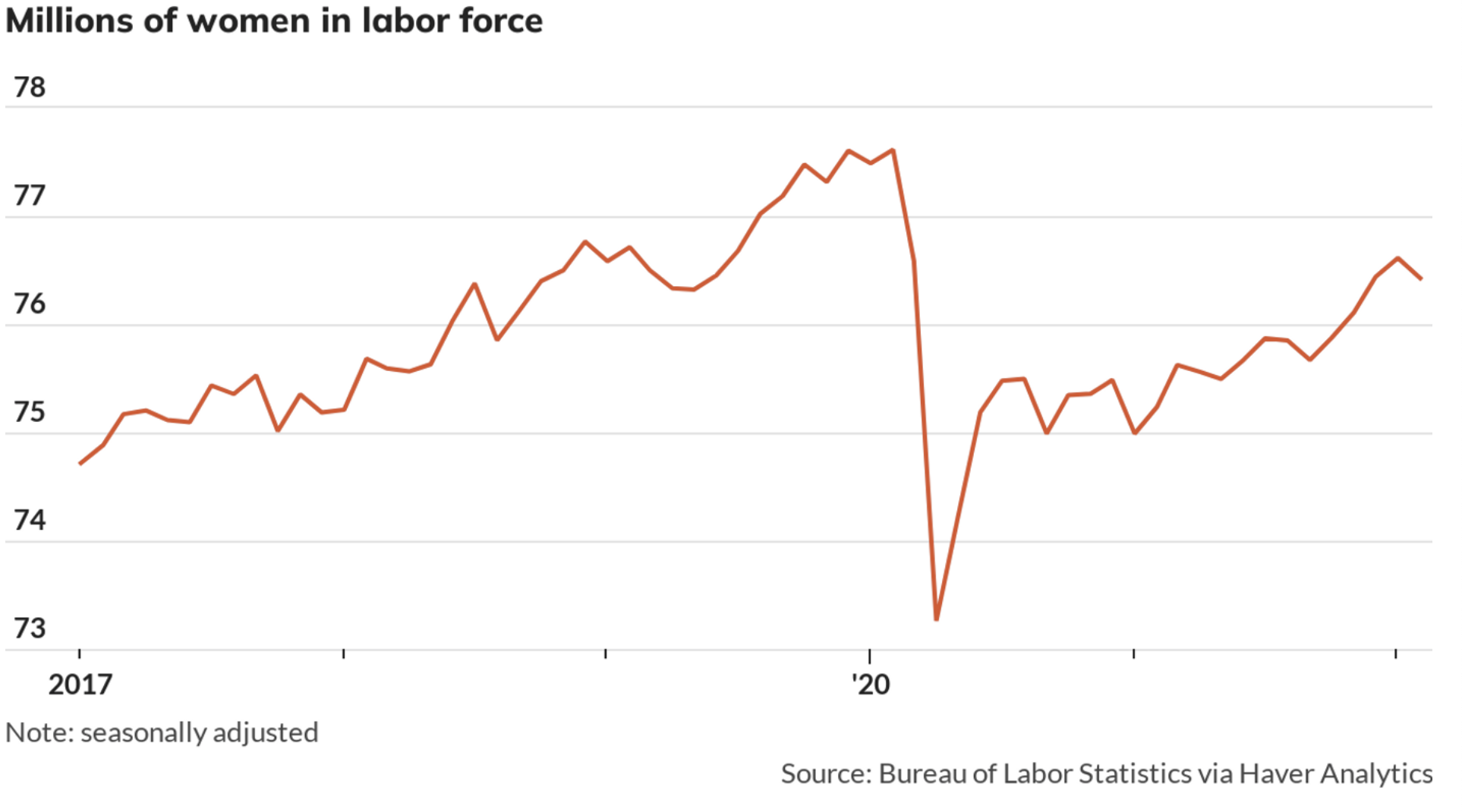
During the pandemic, millions of women left their jobs and nearly 1.2 million fewer women are in the workforce today relative to pre-pandemic levels. According to Wells Fargo economists, nearly one million additional women would enter the workforce if mothers of children under age 6 were able to work at the same rates as mothers of school-age children.