As a professor of practice in public policy and law at the Frank Batten School of Leadership and Public Policy, Gerard Robinson teaches classes on public policy, education and prisons. His focus on public policy to help prepare inmates for success after they are released, and specifically prison educational programs, has led him to travel to other countries to explore programs that have worked elsewhere.
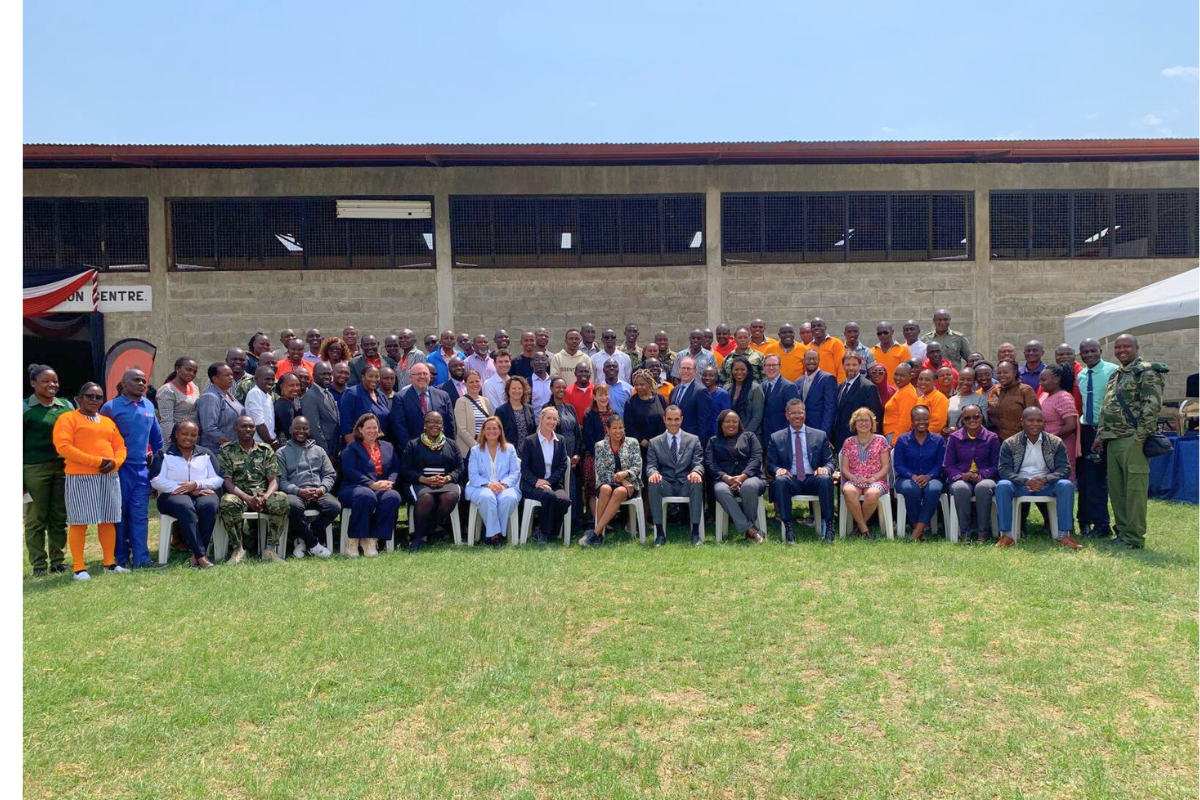
Robinson has a passion for exploring and evaluating various approaches to criminal justice and rehabilitation, and this is something for which he has become known. It’s what led the Honorable Ann Claire Williams (formally retired from the U.S. court of appeals for the 7th Circuit, having served 14 years on the U.S. district court and more than 18 years on the court of appeals) to invite him on a trip to Kenya this past summer to examine a paralegal educational program within prisons there. Williams heads global law firm Jones Day’s efforts to advance the rule of law in Africa. She knew of Robinson’s research in other countries, and she thought a specific program in Kenya would be of special interest to him.
Robinson’s next trip will include students. Learn more here.
Robinson is particularly interested in Justice Defenders, a nonprofit out of the United Kingdom that has worked with more than 55 prisons in Kenya, Uganda and The Gambia to give legal training to hundreds of inmates with an aim to help fellow inmates help themselves. Featured on “60 Minutes” which reports that more than 80% of those incarcerated in Kenya have never been represented by a lawyer and that the results of this legal education program have been ”astounding.”
Joining a contingency of practicing and retired lawyers, Robinson visited the largest maximum-security prison in Kenya housing 1,500 inmates, 80% of whom have been sentenced to life in prison for offenses ranging from theft to murder and sex crimes.
What fascinated Robinson the most was watching both incarcerated men and women learning in the same class. Students also included prison guards, parole officers and senior leadership, all learning together in the same program.
“I’ve visited prisons in 13 U.S. states, and I have never seen men in women in the same class,” said Robinson, adding that he’s also not seen prisoners learning alongside prison administrators and other personnel anywhere in the United States.
Additionally, Robinson is not aware of any U.S. prisons allowing inmates to study law either online or in person. While you can earn an associate’s, bachelor’s or master’s degree while in prison, there is no avenue for earning a legal degree while incarcerated.
“What is stopping them, when you can do other degrees?” asks Robinson, while also acknowledging bar requirements.
Robinson shares a story about two men who went through the Justice Defenders program in Kenya and argued before the supreme court there to change the law around the use of the death penalty, leaving it to individual judges’ discretion. Lawyers in Kenya had tried to do this for years, but it took two men with criminal experiences to make the case for change.
Kenya is not the only country Robinson has visited to examine criminal justice programs with results. He’s also visited prisons and prison programs in Germany, Brazil and Norway to observe prison policies in action and how we might improve upon our policies here in the United States where we have more than 1.2 million people incarcerated.
“As a researcher, I want to figure out what could we do better,” says Robinson. “I’ve taken a look at what we’ve done in the United States, and we’re doing some great things, but every now and then you need to leave home and go some other place. We’re only 4% of the world’s population, and we represent 16% of those incarcerated.”
“Most people know that Norway has one of the best resocialization prison systems in the world,” says Robinson. “They do a great job of preparing people to leave prison and not come back as they have a very different philosophy of punishment. Having seen this firsthand and having looked at research, I think it will be great for Batten students to travel to Norway and take a look.”
Robinson plans to return to Norway in March of 2025 with a group of UVA Batten students to study the keys to that country’s success. Information sessions are being held October 2 and 3, and students can apply here.